
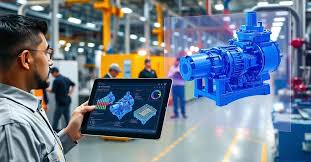

Manufacturing is no longer defined by output or cost efficiency alone. In today’s hyper-competitive landscape, the most successful manufacturers are those that integrate intelligence, adaptability, and sustainability into every layer of production. One transformative technology leading this shift is the Digital Twin — a dynamic virtual representation of physical manufacturing systems. Far from being a buzzword, it represents a new paradigm in how manufacturing processes are designed, monitored, and optimized.
Understanding the Shift Toward Smart Manufacturing
The evolution beyond traditional production
The manufacturing sector has evolved from mass production and lean management to data-driven ecosystems that thrive on real-time feedback. Industry 4.0 has accelerated this evolution by merging physical and digital realms, making machines capable of self-analysis and adaptation. Today, the competitive edge lies in precision, flexibility, and data intelligence — attributes made possible through digital twins.
Defining the digital twin in manufacturing
A digital twin is a high-fidelity virtual model that mirrors a physical asset, machine, or entire production line. It continuously receives data from sensors, control systems, and enterprise software, creating a living simulation of the manufacturing environment. By leveraging this model, engineers can test design changes, predict system failures, and fine-tune production parameters without interrupting actual operations.
Why manufacturers are investing in digital twin ecosystems
The pressure to reduce downtime, improve yield, and meet sustainability goals has made predictive and proactive management essential. Digital twins bridge this gap by offering:
-
Predictive insights for maintenance and process optimization.
-
Simulation capabilities that test changes before implementation.
-
Enhanced agility to adapt to supply chain or design disruptions.
-
Real-time data visibility across the enterprise ecosystem.
Core Pillars of Digital Twin-Driven Process Innovation
1. Intelligent data acquisition
The foundation of any digital twin system is real-time data. Sensors capture variables like temperature, vibration, load, and throughput across machinery and production cells. These are then integrated through high-speed networks, ensuring that both real and virtual models remain synchronized. The richer and more accurate the data, the more powerful the digital twin becomes.
2. High-fidelity simulation
Simulation is where the virtual meets the physical. Through physics-based or AI-driven models, manufacturers can replicate the exact conditions of production. Advanced modeling allows the team to understand how materials respond under specific pressures, how energy flows through systems, and how different process variables interact. This not only improves performance but drastically reduces trial-and-error costs.
3. Predictive analytics and artificial intelligence
Digital twins become exponentially valuable when coupled with machine learning and predictive analytics. AI can detect anomalies long before equipment breakdowns occur, forecast maintenance needs, or identify micro-inefficiencies invisible to human observation. Over time, these algorithms evolve to refine recommendations, resulting in a self-optimizing production environment.
4. Closed-loop feedback and control
Modern digital twin systems create closed-loop feedback between simulation and operations. Data from the shop floor feeds into the twin, which analyzes conditions and sends optimized parameters back to the control systems. This bidirectional exchange allows for continuous improvement without manual intervention, enabling factories to operate with unprecedented precision.
5. Integration across enterprise systems
For digital twins to drive tangible results, they must be integrated with existing Manufacturing Execution Systems (MES), Enterprise Resource Planning (ERP), and Supervisory Control and Data Acquisition (SCADA) systems. Seamless integration ensures that operational decisions are aligned with strategic business objectives — from procurement and logistics to quality assurance.
Strategic Benefits of Implementing Digital Twins
Enhanced operational efficiency
Digital twins streamline production by identifying process inefficiencies in real time. They allow manufacturers to run multiple what-if scenarios, reducing setup times and scrap rates. Continuous optimization ensures that every machine, operator, and workflow performs at peak capacity.
Reduced downtime through predictive maintenance
Traditional maintenance is reactive or scheduled. With digital twins, manufacturers can shift to predictive maintenance, where potential issues are identified before they cause disruptions. This not only saves millions in lost productivity but extends asset life and reduces spare part costs.
Accelerated innovation cycles
Product design and process engineering benefit enormously from digital twin simulations. Design teams can experiment virtually, reducing prototyping time and bringing innovations to market faster. The twin serves as a digital test bench where engineers can validate changes without halting production.
Sustainability and energy efficiency
Sustainability is a defining challenge for modern manufacturing. Digital twins contribute by monitoring energy consumption, material utilization, and emission levels in real time. Manufacturers can model greener processes, reduce waste, and track their environmental performance across facilities.
Improved workforce productivity
By visualizing complex data through intuitive dashboards, digital twins empower workers with actionable insights. Operators no longer react to issues; they anticipate them. Engineers can collaborate remotely, accessing the same live data models across sites, leading to a more connected and capable workforce.
Implementation Challenges and Solutions
Data standardization and quality
Inconsistent data formats can cripple a digital twin initiative. Manufacturers must establish data governance frameworks and ensure that all inputs — from machines to enterprise systems — are standardized, validated, and securely transmitted.
Integration complexity
Many manufacturers operate with legacy systems that are not designed for interoperability. To overcome this, companies should adopt middleware platforms or edge computing solutions that bridge old and new technologies without complete system overhauls.
Cybersecurity risks
With connected systems come vulnerabilities. Cybersecurity must be embedded into the design phase of the digital twin, not added as an afterthought. Encryption, role-based access control, and anomaly detection tools are essential defenses against data breaches or system manipulation.
High initial costs and change management
Although digital twin implementation can be capital-intensive, the ROI becomes evident through reduced downtime and improved efficiency. Equally important is change management — training staff to adopt new workflows and leveraging data insights to guide decisions confidently.
Future Outlook: The Rise of Autonomous Factories
As digital twin technology matures, it will evolve toward autonomous manufacturing ecosystems. These will feature:
-
AI-driven self-optimization of production lines.
-
Collaborative robotics guided by real-time simulations.
-
Dynamic scheduling based on live market and supply conditions.
-
Edge-cloud hybrid architectures that deliver intelligence instantly where it’s needed.
Such systems will blur the line between design, production, and supply chain operations, creating factories that think, adapt, and evolve continuously.
Conclusion
Digital twin-driven process innovation is more than a technological upgrade — it is a strategic transformation that reshapes how manufacturers design, produce, and sustain value. From predictive insights and reduced waste to accelerated innovation, the digital twin acts as the central nervous system of next-generation manufacturing. As industries push toward sustainability, agility, and resilience, digital twins will be at the heart of every high-performing factory.
FAQs
1. How does a digital twin differ from traditional simulation tools?
Traditional simulations are static, while digital twins are dynamic and continuously updated with real-world data, providing live insights and predictive intelligence.
2. What industries benefit most from digital twin implementation?
Aerospace, automotive, electronics, pharmaceuticals, and heavy machinery sectors are leading adopters due to their need for precision, compliance, and efficiency.
3. Is digital twin technology suitable for small and medium-sized manufacturers?
Yes. Scalable digital twin solutions are available, allowing SMEs to start small — such as with a single production line — and expand over time.
4. What kind of data is essential for creating a digital twin?
Operational data (from sensors and machines), design data (CAD models), and contextual data (from ERP and MES systems) are all vital for accurate modeling.
5. How does AI enhance the capabilities of a digital twin?
AI transforms the twin from a passive model into an intelligent system capable of predictive maintenance, process optimization, and adaptive decision-making.
6. What are the key metrics to measure the success of digital twin adoption?
KPIs include reduced downtime, increased throughput, improved yield, lower energy usage, and shorter time-to-market for new products.
7. What future advancements can we expect in digital twin technology?
The future points to greater integration with 5G, augmented reality interfaces, decentralized edge computing, and AI-driven autonomous decision systems.

Comments are closed.