
The Rise of Distributed Microfactories: Decentralizing Global Production for Agility and Sustainability

In the past, industrial strength was defined by the size of a factory — sprawling facilities with endless assembly lines, massive inventories, and centralized control. But that narrative is changing rapidly. A new paradigm called distributed microfactories is reshaping how production networks operate across the globe.
Microfactories represent the next evolutionary step in manufacturing, combining digital fabrication, automation, and data-driven decision-making to enable small, highly efficient, and adaptive production units. These decentralized facilities promise greater agility, sustainability, and resilience in a world of volatile markets and fragile supply chains.
What Are Distributed Microfactories?
A distributed microfactory is a compact, technology-driven production unit designed to manufacture goods close to the point of consumption. Unlike traditional mega-factories that rely on global logistics, microfactories are digitally interconnected and regionally dispersed, enabling localized, on-demand production.
These facilities leverage:
-
Additive manufacturing (3D printing) for low-volume, high-customization outputs.
-
AI-based production planning for real-time optimization.
-
Automation and robotics to maintain consistency across sites.
-
IoT connectivity for seamless coordination across distributed networks.
The result is a manufacturing ecosystem that’s modular, flexible, and globally coordinated — yet locally executed.
The Strategic Shift from Centralization to Decentralization
For decades, manufacturers optimized for economies of scale — producing large quantities in centralized hubs to minimize per-unit costs. However, today’s environment demands economies of scope and responsiveness rather than sheer volume.
The Catalysts Behind the Shift
-
Supply Chain Disruptions: Global crises like the pandemic and geopolitical tensions exposed the fragility of long supply chains.
-
Mass Customization: Consumers now expect personalized products delivered faster than ever.
-
Sustainability Pressures: Long-distance logistics and waste-heavy production models are no longer viable.
-
Digital Manufacturing Tools: Technologies like CNC automation, AI, and additive manufacturing have made small-scale production economically feasible.
This confluence of factors has led companies to embrace distributed microfactory networks, capable of producing anywhere, anytime, with minimal environmental impact.
Core Technologies Powering the Microfactory Revolution
The power of microfactories lies in their technological ecosystem, which replaces traditional industrial infrastructure with digital intelligence and flexibility.
1. Additive and Hybrid Manufacturing
3D printing and hybrid manufacturing enable microfactories to produce complex geometries and low-volume parts efficiently. With digital blueprints, products can be manufactured locally from the same design files, ensuring global consistency with local independence.
2. AI-Driven Production Intelligence
Artificial intelligence governs production schedules, resource allocation, and predictive maintenance. It ensures that each microfactory operates at maximum efficiency, learning from performance data across the global network.
3. Modular Robotics and Automation
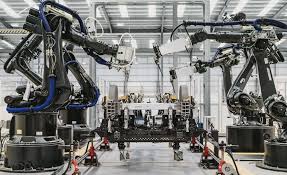
Compact robotic systems allow microfactories to perform high-precision tasks like assembly, inspection, and packaging with minimal human intervention. Robots can be reprogrammed or swapped quickly to handle different product lines.
4. Digital Twins and Simulation
Each microfactory operates a digital twin — a real-time virtual replica of its processes. This enables manufacturers to simulate scenarios, optimize workflows, and ensure system-wide synchronization across locations.
5. IoT and Cloud Connectivity
Interconnected sensors and devices collect and share operational data, creating a real-time production ecosystem. Cloud-based control systems allow manufacturers to monitor performance across all microfactories from a single dashboard.
Advantages of Distributed Microfactories
1. Agility and Responsiveness
Microfactories can adapt to local market demand almost instantly. Instead of shipping products from overseas, brands can manufacture small batches regionally, significantly reducing lead times and logistics costs.
2. Sustainability and Reduced Carbon Footprint
Localized production minimizes transportation emissions. Additionally, digital fabrication methods reduce material waste, while on-demand manufacturing prevents overproduction — aligning perfectly with global sustainability goals.
3. Enhanced Supply Chain Resilience
By decentralizing production, companies avoid bottlenecks caused by disruptions in a single location. Each microfactory acts as an autonomous node, capable of continuing operations even when others face challenges.
4. Cost Efficiency at Scale
While individual microfactories are small, their collective capacity creates a distributed economy of scale. Shared data analytics, cloud-based design repositories, and AI-driven optimization keep costs low without compromising flexibility.
5. Product Customization and Local Relevance
Microfactories empower brands to tailor designs to regional preferences and regulations. Whether it’s customizing bicycle frames in Europe or producing electronics for specific Asian markets, localized manufacturing enhances customer satisfaction.
Real-World Examples of Microfactory Implementation
-
Local Motors (USA): Pioneered the concept by producing 3D-printed vehicles in microfactories located close to target markets.
-
Adidas SPEEDFACTORY: Leveraged automation and robotics to produce customized footwear locally, cutting design-to-shelf time drastically.
-
IKEA’s Modular Micro Production Units: Exploring regional microfactories for assembling furniture near major consumer hubs to reduce emissions and shipping costs.
-
Medical Equipment Manufacturers: During global emergencies, microfactories have been instrumental in producing ventilator components and PPE rapidly at local levels.
These examples underline the real-world feasibility of decentralizing production without compromising quality or efficiency.
The Economic and Environmental Ripple Effects
Distributed microfactories don’t just redefine production — they reshape economic geography and environmental sustainability.
Local Economic Revitalization
By bringing production closer to consumers, microfactories stimulate regional economies, create skilled jobs, and encourage innovation at the community level. This democratizes manufacturing, allowing smaller enterprises and startups to compete globally.
Circular Production Models
Microfactories are ideal for circular economy practices, such as recycling materials, refurbishing components, and reducing end-of-life waste. Their modular setup makes it easier to integrate closed-loop systems.
Reduced Global Dependency
As trade tensions and global instability rise, nations adopting microfactory models gain strategic independence by minimizing reliance on cross-border supply chains.
Challenges in Deploying Microfactory Networks
While the benefits are profound, distributed microfactories present unique challenges that require strategic management.
-
Capital Costs: Setting up multiple micro-scale facilities can be expensive initially, especially with automation integration.
-
Standardization Issues: Maintaining consistent quality across decentralized sites demands robust data governance and calibration protocols.
-
Digital Infrastructure: Seamless operation depends on high-speed connectivity and reliable data synchronization.
-
Cybersecurity Risks: A distributed network increases the attack surface for potential cyber threats.
-
Skill Development: Workforce retraining is essential to manage advanced technologies like robotics, AI, and additive manufacturing.
Organizations addressing these challenges through strategic partnerships, modular design, and AI-based monitoring will gain a competitive edge.
The Future: Networked Production Ecosystems
The future of distributed microfactories lies in networked intelligence — where every microfactory functions as both an independent producer and a contributor to a larger learning ecosystem.
-
Blockchain integration will ensure transparent, tamper-proof data exchange.
-
Edge computing will reduce latency in local decision-making.
-
Collaborative AI will enable factories to learn collectively, improving system-wide performance.
Ultimately, manufacturing will evolve into a global web of intelligent, interconnected production cells — agile, clean, and resilient by design.
Conclusion
The rise of distributed microfactories marks the end of the “bigger is better” era in production. As the world moves toward decentralization, agility and sustainability have become the new measures of industrial success.
By integrating digital manufacturing, AI, and modular design, microfactories are creating a new age of localized, intelligent production — one that empowers communities, reduces waste, and strengthens global resilience. The future of manufacturing won’t be found in colossal plants, but in networks of smart, connected, and sustainable microfactories quietly transforming the world.
FAQs
1. How do distributed microfactories differ from traditional production facilities?
Microfactories are smaller, decentralized units that rely on automation and digital fabrication, allowing on-demand, localized production instead of mass production from centralized plants.
2. What industries benefit most from microfactory deployment?
Sectors like automotive, aerospace, healthcare, consumer goods, and electronics benefit significantly due to their need for flexibility, customization, and regional adaptation.
3. Are microfactories cost-effective for large-scale manufacturing?
Yes. While initial investment may be higher, their operational efficiency, reduced logistics costs, and data-driven optimization ensure long-term cost advantages.
4. What role does AI play in managing distributed production networks?
AI governs production scheduling, maintenance, and resource allocation, ensuring global coordination and real-time efficiency across all sites.
5. How do microfactories support sustainability goals?
They minimize transport emissions, reduce material waste, and enable circular production practices like local recycling and remanufacturing.
6. Can small businesses or startups adopt microfactory models?
Absolutely. Microfactories lower entry barriers by leveraging modular automation and cloud-based control, allowing startups to produce at a competitive scale.
7. What is the long-term outlook for microfactories in the global economy?
They’re set to become the backbone of a decentralized industrial future, driving innovation, regional self-sufficiency, and eco-conscious production worldwide.

Comments are closed.