
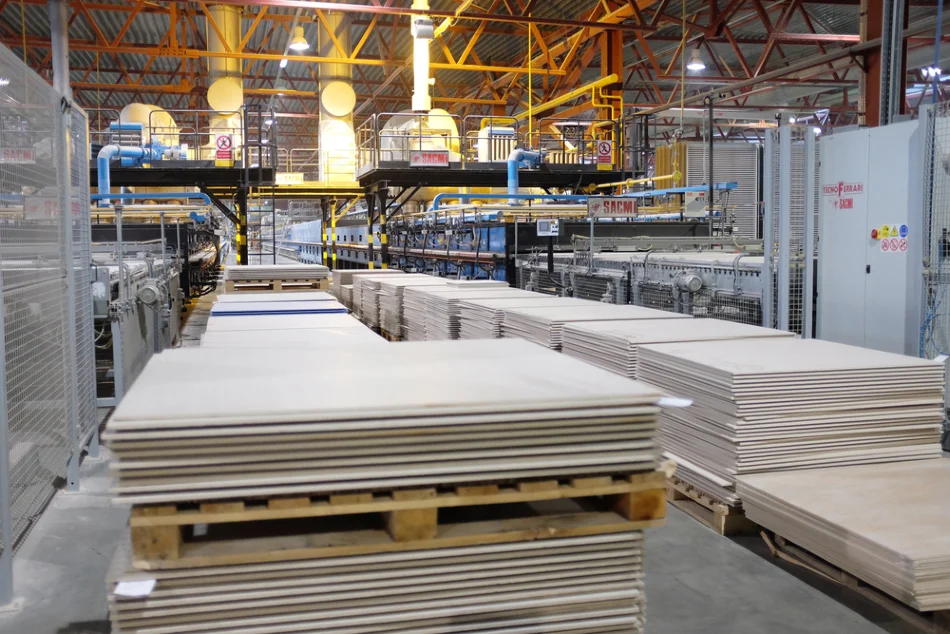

For decades, mentioning ceramics in an industrial setting evoked images of refractory furnace bricks, basic spark plug insulators, or porcelain electrical bushings. They were regarded as functional workhorses: hard and thermally resistant, but notoriously brittle and secondary to the true stars of twentieth-century manufacturing—structural steel, titanium, and nickel superalloys. That traditional hierarchy has inverted. As modern engineering pushes deeper into operating regimes characterized by extreme temperatures, intense corrosive chemistries, and severe electrical stresses, conventional metallurgy is reaching its hard physical limits. In response, advanced technical ceramics have stepped to the forefront of materials science.
Engineered at the atomic scale from ultra-pure synthetic compounds like silicon carbide, aluminum nitride, and yttria-stabilized zirconia, modern technical ceramics share little with their clay-based forebears beyond an inorganic classification. Instead, they represent a class of high-performance materials tailored to thrive precisely where metals soften and polymers vaporize. From aerospace propulsion and electric vehicle architecture to advanced semiconductor fabrication, industrial ceramics have transitioned from niche problem-solvers to foundational enablers of next-generation hardware.
Overcoming Brittleness: Ceramic Matrix Composites and Extreme Thermal Regimes
The historical barrier to structural ceramic adoption was always fracture mechanics. While crystalline covalent and ionic bonds provide unmatched hardness and melting points, they offer virtually no dislocation mobility. A microscopic surface crack in a monolithic ceramic component under tensile load does not yield or deform plastically; it propagates catastrophically at the speed of sound.
To overcome this vulnerability, materials scientists developed ceramic matrix composites (CMCs). By embedding continuous ceramic fibers within a ceramic matrix—such as silicon carbide fibers encased in a silicon carbide matrix—engineers introduced an intentional network of micro-interfaces. When a crack initiates under mechanical or thermal strain, it cannot slice cleanly through the body. Instead, the crack deflects along the fiber boundaries, while the fibers bridge the gap and dissipate mechanical energy. The result is a structural material that preserves the thermal stability of ceramics while gaining damage tolerance analogous to metal alloys.
In commercial and military aviation, CMCs are radically transforming turbine engine architecture. Modern jet engines can burn fuel at temperatures well beyond the melting point of nickel-base superalloys, reaching upwards of 2,400 degrees Fahrenheit without the parasitic cooling air bleed systems that sap turbine efficiency. Components fabricated from CMCs operate hotter, weigh roughly one-third of the metallic parts they replace, and directly lower fuel burn and lifecycle operating costs.
Looking deeper into extreme flight envelopes, research into ultra-high temperature ceramics (UHTCs) is paving the way for sustained hypersonic transit. Compounds composed of transition metal borides, carbides, and nitrides—such as hafnium carbide and zirconium diboride—withstand aerodynamic friction temperatures exceeding 3,000 degrees Celsius. These formulations preserve their sharp leading-edge profiles during atmospheric re-entry and sustained high-Mach flight, eliminating the ablation-driven shape degradation that disrupts aerodynamic stability.
Power Density, Thermal Dissipation, and the Semiconductor Ecosystem
While aerospace showcases the mechanical endurance of advanced ceramics, the digital and electric mobility sectors illustrate their electromagnetic versatility. The relentless pursuit of compact power density in electric vehicles and artificial intelligence infrastructure has created a profound thermal management challenge. Microprocessors and power modules generate concentrated heat fluxes that choke performance unless conducted away immediately.
Here, aluminum nitride and silicon nitride have emerged as indispensable substrates for wide-bandgap semiconductors such as silicon carbide and gallium nitride. Aluminum nitride boasts thermal conductivity rivaling that of metallic aluminum while maintaining outstanding electrical insulation. This unique pairing allows engineers to mount high-voltage dies directly onto ceramic circuit substrates without risking dielectric breakdown or electrical arcing.
Silicon nitride, meanwhile, plays a dual role in electric vehicle drivetrains. In addition to serving as a robust substrate under severe thermal cycling, its high fracture toughness and low density make it the definitive material for high-speed hybrid ceramic bearings. Operating at speeds exceeding 25,000 RPM, electric vehicle motors induce stray currents that can pit and weld conventional steel ball bearings through electrical discharge erosion. Ceramic bearing elements neutralize this risk entirely, lowering friction, eliminating lubrication breakdown, and extending drive unit longevity.
Upstream in the microelectronics supply chain, extreme ultraviolet photolithography relies on specialized ceramics for electrostatic chucks and wafer-handling robotics. Within these plasma-rich, high-vacuum chambers, dimensional drift measured in single-digit nanometers can ruin an entire production run. Structural ceramics offer near-zero coefficients of thermal expansion alongside exceptional plasma corrosion resistance, keeping wafers microscopically flat under intense localized thermal pulses.
Additive Manufacturing Unlocks Complex Geometries
Historically, the exceptional hardness that makes technical ceramics attractive in operation turned machining into a financial and logistical bottleneck. Grinding hardened zirconia or silicon carbide into intricate contours required slow, cost-prohibitive diamond tooling, forcing designers to restrict parts to simple geometric forms such as tiles, cylinders, and planar plates.
The maturation of ceramic additive manufacturing has dismantled these geometric constraints. Technologies like stereolithography, binder jetting, and direct ink writing now use photopolymer slurries or powder beds loaded with sub-micron ceramic particles to produce intricate green bodies layer by layer. Once debound and sintered in high-temperature furnaces, these printed components achieve densities approaching 99 percent of theoretically solid material.
This processing breakthrough allows engineers to design organic, functionally graded architectures previously impossible to realize. High-temperature heat exchangers can now feature convoluted internal channels and gyroid lattices that maximize convective surface area while minimizing pressure drop. In industrial pumps and chemical processing valves, fluid channels can be curved dynamically to eliminate vortex turbulence and localized erosion, tripling the operational lifespan of aggressive slurry-handling systems.
Biocompatibility and the Medical Frontier
Beyond heavy industry and electronics, advanced ceramics are redefining surgical intervention and tissue engineering. First-generation orthopedic implants relied heavily on titanium and cobalt-chrome alloys, which, despite their strength, carry inherent drawbacks: metal ion release into surrounding tissue, galvanic corrosion, and mechanical stress shielding resulting from the stiffness mismatch between metal and human bone.
Biocompatible ceramics, led by yttria-stabilized zirconia and medical-grade alumina, offer chemically inert, wear-resistant articulation surfaces for total hip and knee replacements. Their polished surfaces exhibit remarkably low coefficients of friction against polyethylene liners, minimizing particulate wear debris and extending implant lifespans well beyond thirty years.
Simultaneously, the development of bioactive ceramics and synthetic scaffolds is shifting the paradigm from joint replacement to structural biological regeneration. Porous beta-tricalcium phosphate and bioactive glass formulations bond directly with host skeletal tissue. Engineered with interconnected micro-porosities, these scaffolds serve as temporary load-bearing matrices that guide cellular infiltration and vascular ingrowth, gradually resorbing at a controlled rate as the patient’s native bone regenerates.
Navigating the Industrial Scale-Up
Despite their physical advantages, industrial ceramics face persistent challenges on the path to universal adoption. The primary impediment remains economics. High-purity synthetic precursor powders require energy-intensive chemical synthesis, and the precision sintering cycles necessary to achieve uniform grain structures without micro-porosity are costly to maintain at high throughput.
Furthermore, quality assurance presents unique non-destructive testing challenges. Unlike metals, which display noticeable plastic deformation before failing, a ceramic part with a sub-surface void measuring only a few microns can appear pristine under surface inspection yet fail abruptly under operational load. The industry is responding with advanced high-resolution computed tomography and acoustic emission testing, but standardizing these inspection protocols across international manufacturing lines remains an ongoing priority.
Yet the trajectory is clear. As operating envelopes in energy generation, computing, transportation, and aerospace push past the physical limits of metallic alloys, industrial ceramics are no longer viewed as secondary substitutes. They have become the baseline substrate of modern technological advancement, unlocking performance horizons that were once considered out of reach.

Comments are closed.